


 ??
??

At MRAS digital tools and established manufacturing principles go hand in hand to achieve advanced propulsion technologies. Source (All Images) | ST Engineering MRAS
When JetZero (Long Beach, Calif., U.S.) selected ST Engineering MRAS (Baltimore, Md., U.S.) to design and manufacture the metal exhaust nozzle for its full-scale, all-wing demonstrator aircraft, the decision reflected more than engineering capability. It demonstrated confidence in a manufacturing organization with the industrial maturity, digital integration and certification experience — in both metal and composites — required to support next-generation propulsion systems.
The JetZero demonstrator, scheduled to begin flight testing in 2027, is designed to validate technologies targeting up to a 50% reduction in fuel burn and carbon emissions. As a key supplier of propulsion system components, ST Engineering MRAS is contributing design, engineering and manufacturing expertise to a program intended to de-risk future production and certification pathways.
This role builds on ST Engineering MRAS’ long-standing position as a supplier of nacelle systems and complex aerostructures across commercial, defense and emerging aerospace platforms. While many manufacturers are still translating advanced manufacturing concepts into rate-ready production, MRAS has already deployed and is operating a digitally connected, automation-enabled manufacturing environment. These manufacturing technologies support current programs and are the foundation upon which the next generation of technologies will be built for future aircraft architectures.
“At ST Engineering MRAS, we see it as our mission to develop and bring technologies forward that enable our customers to meet the performance needs of future platforms,” says Mitch Smith, vice president of operations and director of technology and process engineering. “Significant investments are being made in our three technology pillars: Next Generation Materials, Advanced Automation and Digital Thread. Delivering on these technologies will ensure that our current and future products are manufactured on time, on cost, with high quality.”
Engineering beyond materials
Advanced materials remain central to product performance, but ST Engineering MRAS’ strength lies in how those materials are engineered, industrialized and certified. With decades of experience in composite structures, the company fabricates nacelle components using a wide range of resin systems and carbon fiber forms from leading suppliers.

Its manufacturing and assembly expertise spans multiple aerostructures and nacelle components, including fan cowls, inlets and thrust reverser structures, in service across commercial and defense programs. Engineering teams translate aerodynamic and thermal performance requirements into optimized structures, balancing structural efficiency with lightning protection, fire resistance and bird-strike tolerance.
This integration of design and production disciplines enables ST Engineering MRAS to deploy a mature design-for-manufacturing into its development and production programs. This drives designs and manufacturing processes to be repeatable and rate-ready, complying with certification standards from the FAA, EASA, Transport Canada and CAAC for strength, fatigue and damage tolerance.
Automation as an engineering enabler
Established engineering principles guide ST Engineering MRAS’ approach to manufacturing transformation: Automation is not simply about speed, but about precision, repeatability and quality assurance.

MRAS AFP system.
At the company’s 1.9-million-square-foot Baltimore facility, extensive clean- room layup and assembly areas operate as part of an integrated manufacturing ecosystem (read CW’s 2023 plant tour). The automated fiber placement (AFP) systems at ST Engineering MRAS build product and simultaneously inspect materials, ensuring process parameters are monitored in real time throughout the component build and expanding automation to key processes, tool cleaning, acoustic drilling and robotic assembly results in a consistent product.
“We’ve built an environment where automation and human expertise work in concert,” explains Smith. “Our technicians operate within a digital framework that connects design, production and inspection.”
Automation extends beyond the production floor. Robots perform scheduled facility inspections using acoustic, thermal and LiDAR sensors to assess equipment condition and detect deviations. This predictive monitoring supports the reliability of the manufacturing process and reinforces MRAS’ operational resilience.
The digital thread as a production enabler
The backbone of ST Engineering MRAS’ digital strategy is a data thread designed to support high-rate, certified production rather than isolated digital experimentation. The company is rolling out a digital Certificate of Conformance process in collaboration with Plataine (Waltham, Mass., U.S.), creating an AI-enabled framework that connects raw material supply, quality verification, manufacturing execution, and asset management.
“We don’t innovate in isolation.”
Through this system, material data from suppliers is digitally captured and analyzed using AI before materials enter production. Shipping containers arrive with embedded digital information capturing material pedigree, thermal history and other asset information. This data is then automatically processed upon arrival via a secure data transfer and all data is verified to ensure all compliance and quality requirements are met.
This approach streamlines the flow of raw materials, reduces manual intervention, eliminates human error and enhances traceability throughout the supply chain. More importantly, it creates a single, authoritative data environment that links supplier information directly to manufacturing and quality systems.
The digital thread also underpins MRAS’ broader manufacturing optimization strategy. As aircraft OEMs increase production rates, particularly in response to single-aisle ramp-up requirements, the ability to synchronize engineering intent, manufacturing execution and quality assurance becomes critical. Digital continuity allows MRAS to improve throughput while maintaining repeatability, certification integrity and delivery performance.
“This is our focus from a digital technology perspective,” says Smith. “The digital thread allows us to optimize manufacturing flow, support rate increases and ensure quality is built into every stage of the process.”
Proven maturity across programs
ST Engineering MRAS’ manufacturing maturity is reflected in its extensive portfolio, covering both legacy and emerging platforms. The company designs and produces nacelle systems and complex structures for the Boeing 767, 747 and 777X, as well as the Airbus A320neo, Lockheed Martin C-5 and C-130J, and the Bombardier Global 7500. It also engineers high-performance composite components for Archer Aviation and others.
The JetZero blended wing demonstrator program is a recent example of how this capability is applied to next-gen aircraft development. As the designer and manufacturer of the exhaust nozzle, MRAS is supporting a propulsion architecture intended to deliver step-change improvements in efficiency and emissions, while following a deliberate strategy to de-risk production and certification.
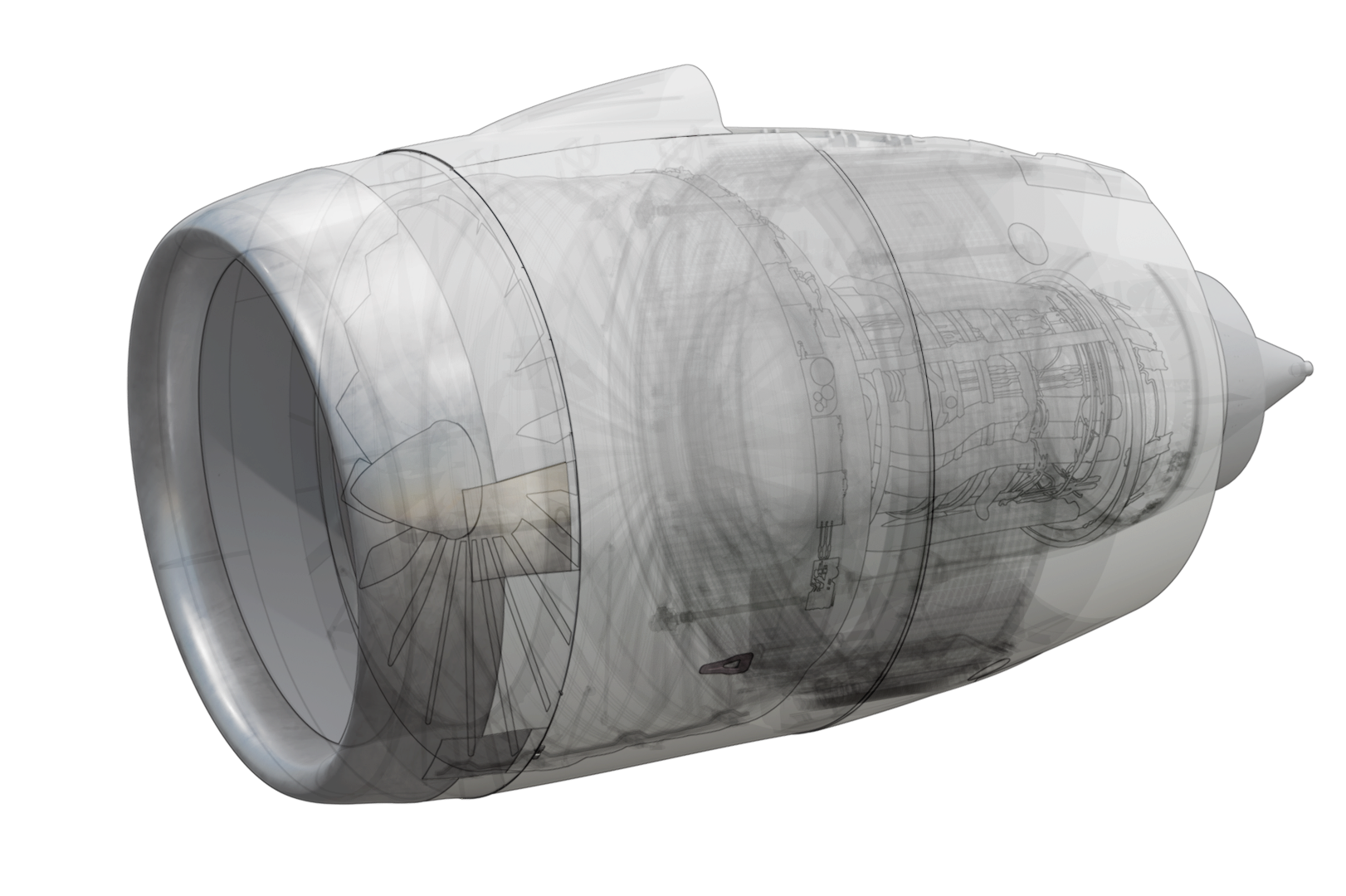
Working alongside JetZero and propulsion system partners, MRAS is applying its established composite engineering, automated manufacturing and certification expertise to ensure the component is not only technically advanced but also producible and certifiable within future program timelines.
Certification is embedded in every engineering activity. ST Engineering MRAS conducts structural, fatigue and bird-strike testing in-house and through accredited test centers, maintaining familiarity with Part 25 and Part 33 requirements.
This extensive body of certified work reflects an industrial readiness that few nacelle suppliers can match. the company believes. While others focus on proof-of-concept demonstrators, ST Engineering MRAS digitally linked production system already manufactures qualified nacelle structures at scale.
Sustainability and process efficiency
Sustainability improvements at ST Engineering MRAS are increasingly driven by digitally enabled process efficiency. The company is actively optimizing autoclave cycles through digital monitoring and control, improving energy efficiency, increasing asset use and reducing variability without compromising certification requirements.
By combining cure cycle optimization with reduced rework and improved first-time quality, MRAS is achieving measurable reductions in energy use and material waste across the production life cycle.
Its phosphoric acid anodizing line and in-house bond primer application process are NADCAP-accredited, ensuring both corrosion resistance and environmental compliance. Similarly, the use of digital monitoring in ST Engineering MRAS’ paint facilities allows precise control of emissions, curing cycles and material usage.
“Efficiency is driven into every layer of our operations,” notes Smith. “Each process operates within a digitally connected system. From fiber placement to final paint, you not only improve throughput but also achieve measurable sustainability gains.”
Building the next-generation nacelle
Current R&D activities at ST Engineering MRAS include the development of advanced composite architectures, improved acoustic liner performance and bonded structures designed to support complex aerodynamic and thermal requirements. Engineering teams are also preparing nacelle designs for greater integration of electrical systems, sensing capability and thermal management, aligning with the needs of hybrid-electric and ultra-high bypass propulsion concepts.
MRAS’ manufacturing and assembly expertise spans multiple aerostructures and nacelle components, including fan cowls, inlets and thrust reverser structures.
These efforts are supported by digital manufacturing tools and data continuity, ensuring that future nacelle designs are developed with production, certification and life cycle support in mind from the outset.
Sugato Bhattacharjee, head of strategy and business development, emphasizes that this systems-level view is essential as propulsion concepts become more distributed and more integrated with the airframe. “The nacelle of the future will incorporate sensing, electrical actuation and thermal management systems within an optimized composite framework,” he explains. “It will interact with digital twins and predictive maintenance tools, creating a continuous data exchange between design, manufacturing and operation. That’s the trajectory we’re already engineering toward.”
“We don’t innovate in isolation,” Bhattacharjee adds. “Our development programs are aligned with customer roadmaps and validated within live production environments. The objective is not experimentation for its own sake but engineering advancement that’s immediately producible at scale and rate.”

 ??Lu public network security: 37140202000173