


 ??
??
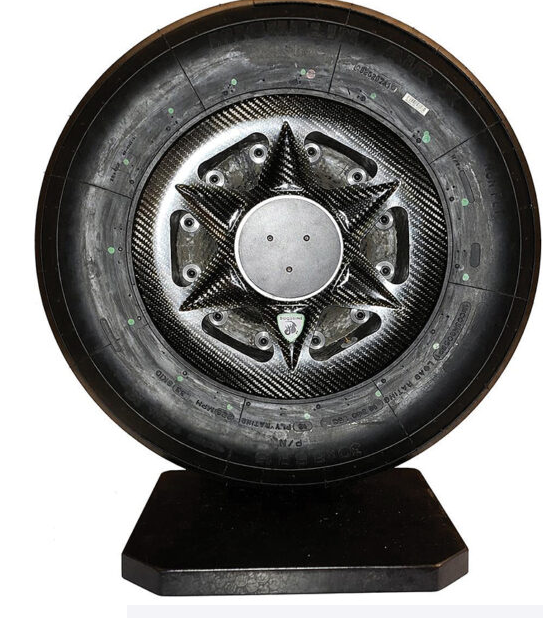
For the group’s R&D management, the technological break is clear and fully assumed: “The primary objective is weight reduction. That is really what drives this project, with an ambition of 30% compared with an aluminium wheel.”
In an aerospace context dominated by the relentless pursuit of weight savings, the wheel, a component that may appear peripheral but is subject to very high loads, represents a still largely untapped optimisation opportunity.
“We are working on the nose wheel because there is no braking on the aircraft’s nose landing gear, and therefore no temperature rise in the wheel,” a pragmatic way of limiting thermal constraints while validating a radically new architecture.
A project born at the crossroads of expertise
While the idea of a composite wheel may appear bold, its origins are rooted in a coherent industrial logic. The project is part of TRIER, a CORAC (French Civil Aeronautical Research Council) programme led by Safran, whose overall objective is clear, “to reduce the mass of aircraft landing gear.”

 ??Lu public network security: 37140202000173